






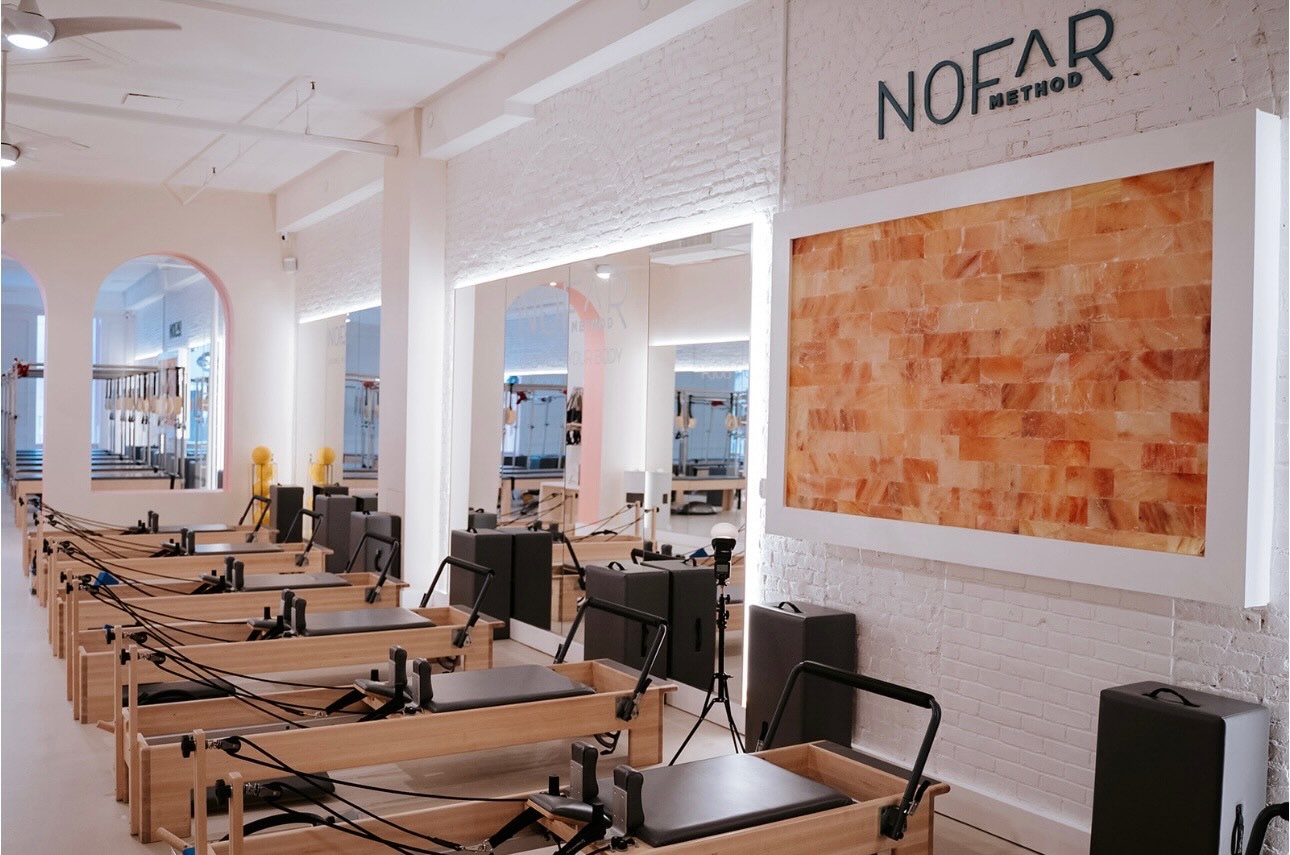
As Pilates studios multiply across New York City, Nofar Method founder Nofar Hagag explains what separates a lasting method from just another reformer studio.
For the longest time, Pilates was a fringe workout, operating on the cusp of yoga and other workouts. But now, according to reports, there are more pilates studios in NYC than there are Starbucks. So how do you choose the RIGHT pilates studio? How do you separate from the masses? “Opening a beautiful space with reformers is relatively easy; creating a distinct method, educating teachers, maintaining consistency, and giving clients a reason to return year after year is much harder,” says Nofar Hagag, founder of the Nofar Method.
Founded in 2019, Nofar Method is a boutique Pilates brand with studios in Flatiron, Tribeca, and Miami Beach. Known for its signature 50-minute class combining the Reformer and Cadillac, the method has trained more than 50,000 clients and was named one of Newsweek’s Best Boutique Fitness Brands of 2026.
Hagag says there is a lack of clarity and quality control that can come with very rapid growth, but that growth can bring new challenges.
“I think it shows just how much Pilates has grown and how much people have come to value this type of movement. New York is one of the most competitive fitness markets in the world, so that growth is exciting, but as the market becomes more crowded, having a clear identity and maintaining the quality of your teaching becomes even more important,” adds Hagag.
With potential expansion on the horizon (The Miami New Times named Nofar Method the Best Pilates Studio for 2026), the studio can seem like a who’s who of clients like Brooke Shields, Emily Ratajkowski, Paulina Porizkova, Karlie Kloss and others.
Nofar Method is also meeting demand beyond the usual audience. The brand’s growing male clientele, up significantly year over year, has led to dedicated Pilates for Men classes, reflecting a broader shift as more men embrace Pilates for strength, mobility, and injury prevention. The studio has also introduced longevity-focused programming for clients 55 and older, part of an industry-wide move away from aesthetics-driven fitness and toward training built for long-term strength and healthy aging and is expanding its specialty programming this October with a new teen class, taught personally by founder Nofar Hagag.
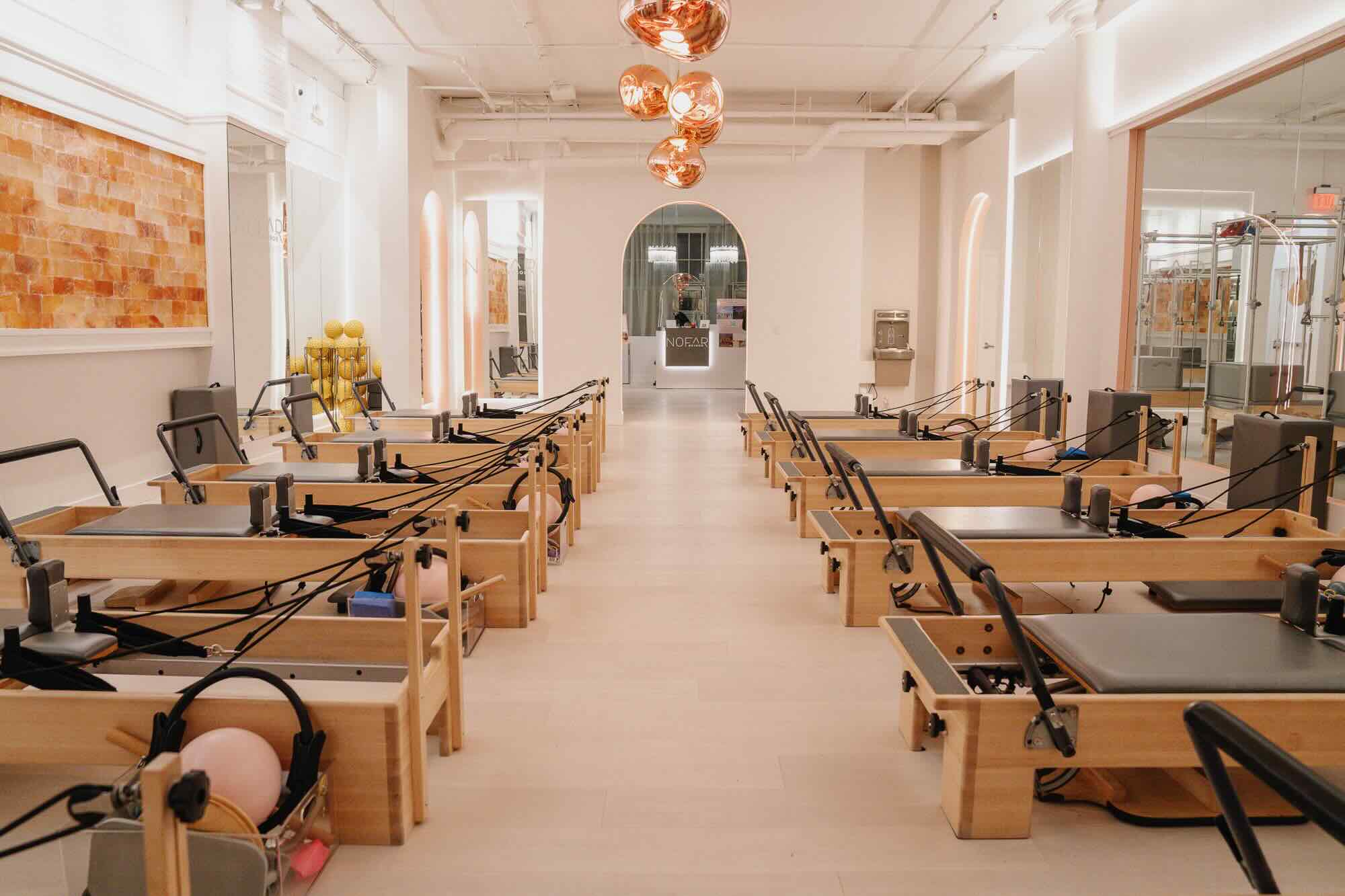
How would you best describe The Nofar Method as compared to other Pilates classes/studios?
NOFAR: The Nofar Method is not a traditional Pilates class. We take the foundation and principles of classical Pilates and combine them with strength, cardio, mobility, and coordination to create a more dynamic and challenging full-body experience. Every class is intentional and constantly evolving, with the goal of not only building strength, but also improving posture, mobility, and the way the body moves as a whole. Our signature 50-minute class is divided between 25 minutes on the Reformer and 25 minutes on the Cadillac, which allows us to create greater variety, flow, and a truly complete workout. But the biggest difference is not only what we teach, it is how we teach it. I always say that movement is a language, and a great instructor has to know how to read the room and understand the person in front of them: when to challenge, when to correct, and when to simply allow someone to experience the movement. I want clients to leave feeling stronger and proud of what their body just accomplished, but also more aligned, present, and connected to themselves.
How has pilates evolved in the last decade or so since becoming somewhat mainstream?
NOFAR: Pilates has changed tremendously over the last decade. What was once considered a more specialized form of exercise has become part of mainstream fitness and wellness culture. I think that evolution is exciting because it has introduced so many more people to movement and to the benefits of Pilates. At the same time, popularity comes with responsibility. Pilates grew so quickly that the word itself now represents many very different experiences. Classical Pilates, contemporary Pilates, Lagree and other machine-based workouts are often placed in the same category, even though they are very different. There is also no universal standard for who can open a studio or call themselves a Pilates instructor. That concerns me because someone’s first experience can completely shape what they think Pilates is. Growth is wonderful, but quality and education have to grow with it.
How many students/clients have taken your classes globally?
NOFAR: To date, more than 50,000 clients have experienced Nofar Method. It’s incredibly rewarding to see how much the community has grown and to have had the opportunity to introduce the Method to people from around the world. What means the most to me, though, is not only the number of people who have taken our classes, but the community we’ve built and the clients who continue to make the Nofar Method part of their lives. I started the company very simply, with about $5,000, renting studio space by the hour and teaching the classes myself. So when I look at where we are today, I feel mostly grateful. I never could have imagined in those early days how many people would eventually become part of this community.

How many teachers do you employ overall?
NOFAR: Across our New York and Miami studios, we currently have approximately 45 instructors. Every teacher is trained in the Method, and I’m very particular about who represents it. Technique can be taught, but I also look for kindness, humility, emotional intelligence, curiosity, and accountability. Clients may not remember every exercise, but they remember how you made them feel.
What is the purpose of having both the Cadillac and the reformer?
NOFAR: The Reformer and Cadillac offer very different opportunities for movement, which is why using both is central to Nofar Method. The Reformer brings resistance, athleticism, and flow, while the Cadillac allows us to challenge the body through springs, bars, and different relationships to gravity. Moving between the two keeps the class dynamic, helps us access the entire body, and gives clients much more variety within 50 minutes. It also keeps people mentally engaged because the body is constantly being challenged in a new way.
Are there plans to expand in Manhattan?
NOFAR: I’m always open to the right opportunity in Manhattan, but I’ve tried to grow Nofar Method thoughtfully and at a pace that allows us to protect the quality of the experience. For me, expansion has to feel right for the Method, the team, and the community we’ve built. Manhattan will always be incredibly important to us, so if the right space and opportunity come along, I would absolutely consider growing our presence here.
More information can be found through https://nofarmethod.com/